
From Cousteau’s Log to World Icon: A Short History of Sipadan
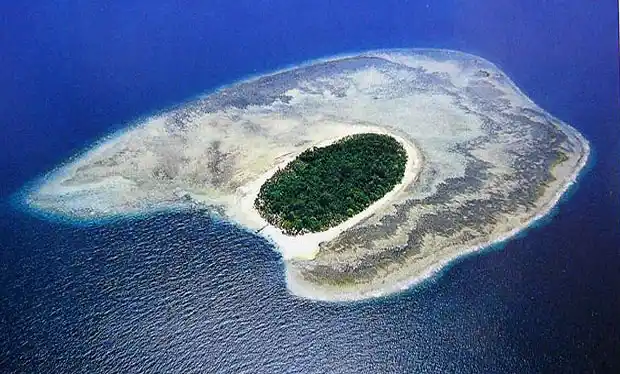
Guests sometimes ask why this one speck of green gets treated like a national treasure with a velvet rope. The answer is a story in four acts and knowing it changes how the island feels when you finally roll off the boat there.
Table of Contents
- Act one: a volcano puts on a coral hat
- Act two: the Cousteau years
- Act three: the resort era, and its end
- Act four: the permit era
- The island you'll dive
Act one: a volcano puts on a coral hat
Sipadan is Malaysia's only oceanic island, the summit of an extinct volcanic seamount rising roughly 600 metres from the Celebes Sea floor, capped by thousands of years of coral growth. That isolation is the whole trick: open-ocean water and open-ocean animals arrive at a reef the size of a city park with no shallow shelf to dilute them. Geology wrote the guest list long before tourism did.
Act two: the Cousteau years
Divers and researchers knew the island quietly for years but the late 1980s changed its fate: Jacques Cousteau's team filmed here, turtle caves and all and described the island as the kind of untouched place he'd stopped expecting to find. The documentary went out to the world, and the world, being the world, immediately booked flights. Fame arrived faster than rules did.
Act three: the resort era, and its end
Through the 1990s, dive lodges operated directly on the island. Wonderful for wake-up-and-dive romance; measurably less wonderful for a small reef absorbing generators, jetties, freshwater demand and round-the-clock diver traffic. The reckoning came in 2004, when operations were moved off the island entirely and by 1 January 2005 the island stood empty of resorts. The lodges relocated to Mabul, Kapalai and the surrounding area, where the entire industry lives today and Sipadan went back to being a place you visit rather than occupy.
Divers who knew the island in the nineties and returned recently tell me the same thing in different accents: the fish are less wary, the shallows busier, the whole reef somehow louder. Anecdote isn't data but twenty years of anecdotes pointing one direction is at least a trend.
The permit queue, in other words, is the receipt for something that worked.Act four: the permit era
Protection then took its modern shape: Sabah Parks management, the daily permit quota, standing at 254 in 2026, the Advanced-certification rule, three dives per permit day and most recently the full November closures that hand the reef an annual month of silence. Each rule annoyed somebody at the time. Each one is why the diving still merits the fame; the full timeline is on our Sipadan history page.
The island you'll dive
What you inherit from those four acts: an uninhabited island, walls that behave as though the twentieth century mostly didn't happen and a visit that feels earned. Read the deeper background on Sipadan facts then pick a base with a real permit allocation and go collect your own chapter. History here isn't a museum plaque; it's the explanation for every rule your booking runs into and knowing it makes the rules feel less like bureaucracy and more like stewardship you're briefly part of.